
Car Battery Dead on a Cold Morning? Why Batteries Fail in Fall and What to Check First
It’s a familiar fall surprise: the car started without a problem yesterday, but this morning the engine cranks slowly, or won’t start at all. A cold snap can expose a car battery that was already losing strength, even if it seemed fine through summer.
Before you assume the battery needs replacing, check the warning signs and rule out common causes such as loose terminals, an electrical drain, or a charging-system problem. A proper test can help identify what’s really behind the no-start.
Why cold weather can expose a weak car battery
A car battery produces electricity through chemical reactions. As temperatures drop, those reactions slow, reducing the power available to start the engine. At the same time, cold engine oil thickens and makes the engine harder to crank. The starter therefore needs more power just when the battery may be able to provide less.
That combination explains why a marginal battery might get through a warm summer and fail on the first cold morning. Heat can also contribute to battery wear over time, so an older battery may have less reserve than it appears to have when the weather is mild.
What CCA tells you
Cold-cranking amps, or CCA, indicate how much starting power a battery is designed to deliver in cold conditions. The correct rating depends on your vehicle’s requirements. A battery that starts the car during mild weather may still struggle if it can no longer provide the needed power when temperatures fall.
Choosing a replacement isn’t just about picking the highest CCA number. Battery type, size, terminal layout, and the manufacturer’s specifications matter, too.
Warning signs your car battery may be weakening
A battery rarely fails without giving any clues. Watch for changes such as:
- Slow cranking: The engine turns over more sluggishly than usual.
- Dim headlights at idle: Lights brighten when you rev the engine or dim when other electrical accessories are in use.
- A battery or charging warning light: This can point to a charging-system issue, not just an aging battery.
- Corrosion or loose connections: Powdery buildup or clamps that move can interfere with the flow of electricity.
- A swollen or damaged battery case: This needs prompt professional attention; don’t try to jump-start a visibly damaged battery.
- Repeated jump-starts: Needing a jump once is a reason to test the system, not just charge the battery and hope the problem goes away.
- Age: A battery more than about three years old deserves closer attention, particularly if cold-weather starting has become less reliable.
One symptom alone doesn’t confirm the battery is bad. Slow cranking, for example, can also result from poor connections, a starter problem, or an issue with the charging system.
What to check first before replacing the battery
A no-start doesn’t always mean the battery itself has failed. A sensible inspection checks the connections and charging system as well as the battery.
1. Look at the terminals and clamps
With the vehicle off, look for corrosion around the battery terminals and check whether the clamps appear loose or damaged. Poor contact can restrict the power needed to start the engine. Avoid touching the terminals with metal tools or attempting a repair if you’re unsure how to do it safely.
2. Consider a possible electrical drain
Check whether lights, chargers, or other accessories may have been left on. If the battery goes flat repeatedly even when accessories are switched off, the vehicle may have a parasitic drain. An electrical component drawing power while the car is parked. Finding the cause can require diagnostic testing.
3. Check the charging system
The alternator and related charging components replenish the battery while the engine runs. If the alternator isn’t charging correctly, a new or recently recharged battery may soon be low again. A battery warning light, dimming lights, or repeated dead-battery episodes are good reasons to have the charging system checked.
4. Note the battery’s age and history
Look for the battery’s date label if it’s accessible, and tell your technician if it has needed a jump. Age, previous test results, and how the vehicle is used can help guide the next step. Frequent short trips or long periods parked may also mean the battery gets fewer chances to recharge fully.
Voltage check versus a proper battery test
A simple voltage reading can show whether a battery is charged at that moment, but it doesn’t necessarily show whether the battery can deliver enough power under starting load. A weak battery may display a reasonable voltage and still fail when asked to crank the engine.
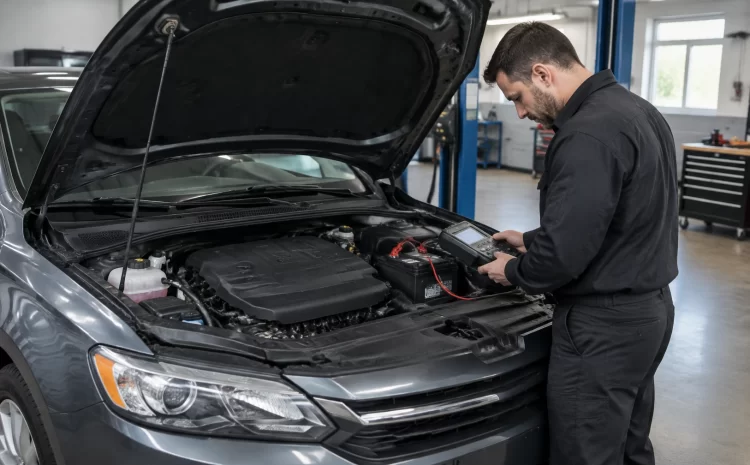
A load or conductance test assesses the battery’s ability to supply starting power. The result should be considered against the battery’s rating and the vehicle manufacturer’s requirements. If a battery is discharged, it may need to be properly charged before its health can be judged. Testing the charging system at the same time helps distinguish a failing battery from an alternator or wiring issue.
For drivers in Lancaster, DrivenMotos offers battery and charging-system testing as part of its diagnostics and inspections services. Advanced diagnostic technology and testing help our ASE-certified technicians investigate the cause rather than replacing parts based on guesswork.

What to do if your car won’t start on a cold morning
First, switch off accessories such as the headlights, climate control, and radio. If the engine cranks slowly, repeated attempts can further discharge the battery. If you notice a swollen case, cracks, leaking fluid, or suspect the battery may be frozen, don’t attempt a jump-start. Step away and get professional help.
If you use jumper cables
Read your owner’s manual first. Some vehicles require specific jump-start points or procedures, and the manual takes priority. For a conventional 12-volt vehicle that permits a jump-start, use correctly rated cables and follow the instructions carefully:
- Turn off both vehicles and make sure they are not touching.
- Connect the red clamp to the disabled vehicle’s positive terminal, then connect the other red clamp to the donor battery’s positive terminal.
- Connect the black clamp to the donor battery’s negative terminal. Attach the remaining black clamp to a designated ground point on the disabled vehicle, away from the battery.
- Start the donor vehicle, then try to start the disabled vehicle. Keep cables clear of moving parts, and don’t let clamps touch one another.
If the vehicle doesn’t start after checking that the connections are secure, stop rather than continuing repeated attempts. If it does start, remember that a jump is only a way to get going: it doesn’t identify the cause or prove the battery is healthy. Arrange to have the battery and charging system tested.
When replacement makes sense, and when recharging may be enough
Recharging may be appropriate if the battery is in good condition and was drained by something left on. But a battery that repeatedly goes flat, fails a proper test after it has been charged, or has physical damage may need replacement. A technician can also check whether the alternator is charging correctly before a replacement is recommended.
Routine checks can help catch a weak battery before a cold morning leaves you stranded. Adding a battery and charging-system inspection to your regular car maintenance is especially useful if your battery is getting older or starting has become less dependable.
Get a clear answer before the next cold start
For drivers in Lancaster, Rock Hill, Indian Land, Kershaw, and Chester, DrivenMotos Auto Care Clinic provides dealership-quality service without dealership pricing, with a family-run approach to honest communication. We’re one of only 12% of NAPA’s 6,450 nationwide garages to earn Gold Certification. Our ASE-certified technicians bring more than 60 years of combined experience, and our 3-year/36,000-mile nationwide parts and labor warranty includes free roadside assistance.
If your car battery is slow to start, has needed a jump, or leaves you unsure what to check next, book a battery and charging-system test or call 803-718-0651. You’ll find us at 1709 Usher Rd, Lancaster, SC 29720.